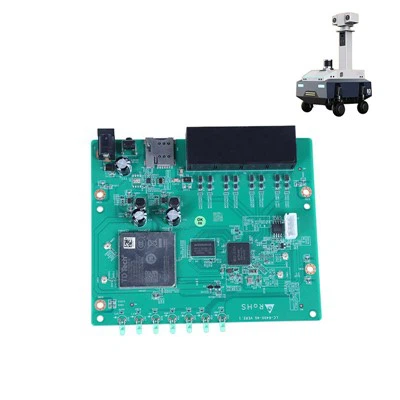
Hey there! As a supplier of Heater Control PCBs, I've seen firsthand how crucial it is to have effective heat dissipation methods for these boards. In this blog, I'll share some of the most common and effective ways to keep your Heater Control PCB cool and functioning properly.
Why Heat Dissipation Matters
Before we dive into the heat dissipation methods, let's talk about why it's so important. When a Heater Control PCB is in operation, it generates heat. If this heat isn't dissipated properly, it can cause a variety of problems, including:
- Reduced component lifespan: Excessive heat can damage electronic components, leading to premature failure.
- Performance issues: High temperatures can cause the PCB to malfunction or operate at a reduced capacity.
- Safety risks: In extreme cases, overheating can lead to fires or other safety hazards.
So, ensuring proper heat dissipation is essential for the longevity, performance, and safety of your Heater Control PCB.
Heat Dissipation Methods
1. Heat Sinks
One of the most common heat dissipation methods for Heater Control PCBs is the use of heat sinks. A heat sink is a passive cooling device that absorbs and dissipates heat from the PCB. It typically consists of a metal plate or finned structure that increases the surface area available for heat transfer.
Heat sinks work by conducting heat away from the hot components on the PCB and into the surrounding air. The larger the surface area of the heat sink, the more effectively it can dissipate heat. Some heat sinks are designed to be mounted directly on the PCB, while others can be attached to the enclosure or other external components.
For example, if you're using a Bedroom VC Heater Controller, a heat sink can help keep the controller cool and prevent overheating.
2. Fans
Another popular heat dissipation method is the use of fans. Fans are active cooling devices that move air across the PCB, helping to carry away heat. They can be used in conjunction with heat sinks or on their own.
There are several types of fans available, including axial fans, centrifugal fans, and blower fans. Axial fans are the most common type and are designed to move air in a straight line. Centrifugal fans, on the other hand, move air perpendicular to the axis of rotation, making them more suitable for applications where space is limited. Blower fans are similar to centrifugal fans but are designed to produce a higher pressure airflow.
When choosing a fan for your Heater Control PCB, it's important to consider factors such as the size of the PCB, the amount of heat generated, and the available space. You'll also want to choose a fan that is quiet and energy-efficient.
For instance, a Tower Fan Controller PCBA may benefit from the use of a fan to keep the components cool and ensure optimal performance.
3. Thermal Pads and Compounds
Thermal pads and compounds are materials that are used to improve the thermal conductivity between the PCB and the heat sink or other cooling components. They help to fill in any gaps or irregularities between the surfaces, allowing heat to transfer more efficiently.
Thermal pads are pre-cut sheets of material that are placed between the PCB and the heat sink. They are easy to install and provide a good level of thermal conductivity. Thermal compounds, on the other hand, are pastes that are applied directly to the surface of the PCB or heat sink. They offer a higher level of thermal conductivity than thermal pads but can be more difficult to apply.
Using thermal pads or compounds can significantly improve the heat dissipation performance of your Heater Control PCB. For example, if you're using a Matter Ceiling Fan Light Controller, applying a thermal compound between the controller and the heat sink can help to transfer heat more effectively.
4. Printed Circuit Board Design
The design of the printed circuit board itself can also play a role in heat dissipation. By optimizing the layout of the components and traces, you can reduce the amount of heat generated and improve the overall thermal performance of the PCB.


Some design considerations for heat dissipation include:
- Component placement: Placing high-power components away from each other and near the edges of the PCB can help to improve airflow and reduce heat buildup.
- Trace width and spacing: Using wider traces and appropriate spacing between traces can help to reduce resistance and heat generation.
- Copper pour: Adding a copper pour to the PCB can help to spread heat more evenly across the board.
By paying attention to these design factors, you can create a Heater Control PCB that is more efficient at dissipating heat.
Conclusion
In conclusion, effective heat dissipation is essential for the proper functioning and longevity of a Heater Control PCB. By using heat sinks, fans, thermal pads and compounds, and optimizing the PCB design, you can keep your PCB cool and prevent overheating.
If you're in the market for a Heater Control PCB or have any questions about heat dissipation methods, feel free to reach out to us. We're here to help you find the best solution for your needs.
References
- "Thermal Management for Printed Circuit Boards," IPC-2221A, Association Connecting Electronics Industries.
- "Heat Sink Design and Selection," Electronics Cooling, April 2003.
- "Thermal Interface Materials: A Review," Journal of Electronic Materials, Vol. 40, No. 6, 2011.