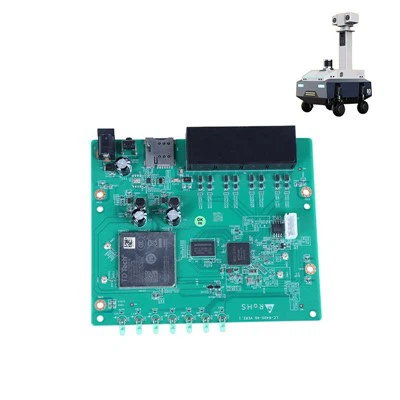
A heat pump is a highly efficient device used for heating and cooling, and its performance is significantly influenced by the Heat Pump Controller PCBA. As a supplier of Heat Pump Controller PCBA, I will delve into how this essential component adjusts the heat pump's capacity.
1. Understanding the Basics of a Heat Pump
Before exploring how the Heat Pump Controller PCBA works, it's important to understand the basic principles of a heat pump. A heat pump transfers heat from a low - temperature source to a high - temperature sink. It can operate in both heating and cooling modes. In heating mode, it extracts heat from the outside environment (even in cold weather) and transfers it indoors. In cooling mode, it removes heat from the indoor space and releases it outside.
The capacity of a heat pump refers to the amount of heat it can transfer per unit of time, usually measured in British Thermal Units per hour (BTU/h) or kilowatts (kW). Adjusting the heat pump's capacity is crucial to ensure efficient operation and meet the changing heating or cooling demands of a space.


2. The Role of Heat Pump Controller PCBA
The Heat Pump Controller PCBA acts as the brain of the heat pump system. It is responsible for monitoring various parameters and making adjustments to optimize the heat pump's performance. Here are the key functions and ways it adjusts the heat pump's capacity:
2.1 Sensor Data Collection
The Heat Pump Controller PCBA is connected to a variety of sensors, such as temperature sensors, pressure sensors, and humidity sensors. These sensors provide real - time data about the indoor and outdoor environment, as well as the operating conditions of the heat pump itself. For example, temperature sensors can measure the indoor and outdoor air temperatures, while pressure sensors can monitor the refrigerant pressure in the heat pump's system.
Based on the data collected from these sensors, the controller can accurately assess the current heating or cooling requirements. If the indoor temperature is lower than the setpoint in heating mode, the controller knows that more heat needs to be provided. Conversely, if the indoor temperature is higher than the setpoint in cooling mode, the controller will take steps to reduce the heat pump's output.
2.2 Compressor Control
The compressor is the heart of a heat pump, and controlling its operation is a key way to adjust the heat pump's capacity. The Heat Pump Controller PCBA can control the compressor's speed and on/off state.
- Variable - speed Compressors: Many modern heat pumps are equipped with variable - speed compressors. The controller can adjust the compressor's speed based on the heating or cooling demand. When the demand is low, the compressor can run at a lower speed, consuming less energy. As the demand increases, the controller can increase the compressor's speed to provide more heat or cooling. This variable - speed operation allows the heat pump to precisely match the load, improving energy efficiency and reducing wear and tear on the compressor.
- On/Off Control: In addition to variable - speed control, the controller can also turn the compressor on or off. When the indoor temperature reaches the setpoint, the controller will turn off the compressor to prevent over - heating or over - cooling. Once the temperature deviates from the setpoint again, the controller will turn the compressor back on.
2.3 Expansion Valve Regulation
The expansion valve is another important component in a heat pump system. It controls the flow of refrigerant into the evaporator. The Heat Pump Controller PCBA can adjust the opening of the expansion valve based on the system's operating conditions.
If the heat pump needs to increase its capacity, the controller will open the expansion valve wider to allow more refrigerant to flow into the evaporator. This increases the heat transfer rate and thus the heat pump's output. Conversely, when the capacity needs to be reduced, the controller will close the expansion valve to restrict the refrigerant flow.
2.4 Fan Speed Control
The fans in a heat pump, including the indoor and outdoor fans, also play a role in heat transfer. The Heat Pump Controller PCBA can adjust the fan speed to optimize the heat exchange process.
In heating mode, increasing the indoor fan speed can help distribute the warm air more effectively throughout the space. In cooling mode, a higher outdoor fan speed can enhance the heat dissipation of the condenser. By adjusting the fan speed according to the heat pump's capacity requirements, the controller can improve the overall efficiency of the system.
3. Advanced Control Strategies
In addition to the basic control functions mentioned above, modern Heat Pump Controller PCBA often employs advanced control strategies to further optimize the heat pump's capacity adjustment.
3.1 Fuzzy Logic Control
Fuzzy logic control is a method that mimics human decision - making processes. It can handle imprecise or uncertain information, such as changes in environmental conditions. The Heat Pump Controller PCBA using fuzzy logic can make more intelligent decisions about adjusting the heat pump's capacity. For example, it can take into account factors like the rate of temperature change, humidity levels, and the time of day to determine the most appropriate capacity setting.
3.2 Adaptive Control
Adaptive control allows the Heat Pump Controller PCBA to adjust its control parameters based on the heat pump's actual operating performance. Over time, the controller can learn the characteristics of the heat pump and the building's thermal properties. It can then adjust the capacity control strategies to adapt to different situations, such as changes in weather conditions or building occupancy.
4. Benefits of Using Our Heat Pump Controller PCBA
As a supplier of Heat Pump Controller PCBA, we offer several advantages to our customers:
- High - precision Control: Our PCBA is designed to provide accurate and reliable control of the heat pump's capacity. With advanced sensors and control algorithms, it can precisely adjust the compressor speed, expansion valve opening, and fan speed to meet the specific heating or cooling needs of different spaces.
- Energy Efficiency: By optimizing the heat pump's capacity, our controller helps reduce energy consumption. This not only saves on energy costs for the end - users but also contributes to environmental protection.
- Reliability and Durability: Our Heat Pump Controller PCBA is built with high - quality components and undergoes strict quality testing. It can operate stably in various environmental conditions, ensuring long - term reliable performance of the heat pump system.
5. Related Products
In addition to Heat Pump Controller PCBA, we also offer other related products, such as Dehumidifier Controller PCBA and Air Purifier Controller PCBA. These products are designed to provide intelligent control for dehumidifiers and air purifiers, respectively, ensuring optimal performance and user comfort.
6. Contact Us for Procurement
If you are interested in our Heat Pump Controller PCBA or other related products, we welcome you to contact us for procurement and negotiation. We are committed to providing high - quality products and excellent customer service to meet your specific needs.
References
- ASHRAE Handbook - HVAC Systems and Equipment. American Society of Heating, Refrigerating and Air - Conditioning Engineers.
- “Control Strategies for Heat Pumps” by various researchers in the field of HVAC engineering.
- Technical documentation from leading heat pump and PCBA manufacturers.